Windshield adhesive removal facts
These facts explain windshield adhesive removal
Technicians cut windshield urethane, they do not dissolve it
Cold knives, wire systems and power cutters free the old glass.
The old windshield bead is trimmed to a thin even layer
Fresh urethane bonds to the clean cut old urethane.
Bare metal on the windshield frame gets primer
Unprimed scratches can rust under the seal and leak.
New windshield urethane needs its safe drive away time
The bond must cure before the car goes back on the road.
Windshield urethane holds the glass in place
A modern windshield is bonded to the car body with urethane, a strong adhesive that cures from moisture in the air. That bond seals out water and wind, helps the roof resist crushing in a rollover, and backs up the passenger airbag, which inflates against the glass. Older cars and many big trucks set glass in a rubber gasket instead, but almost every car on Dallas roads today uses urethane.
When the old windshield comes out, the technician has to deal with that bead of cured urethane all the way round the frame. How it is handled decides how well the new glass seals.
Technicians cut out the old windshield with four main tools
Windshield cut out tools
Four tools cut through old windshield urethane
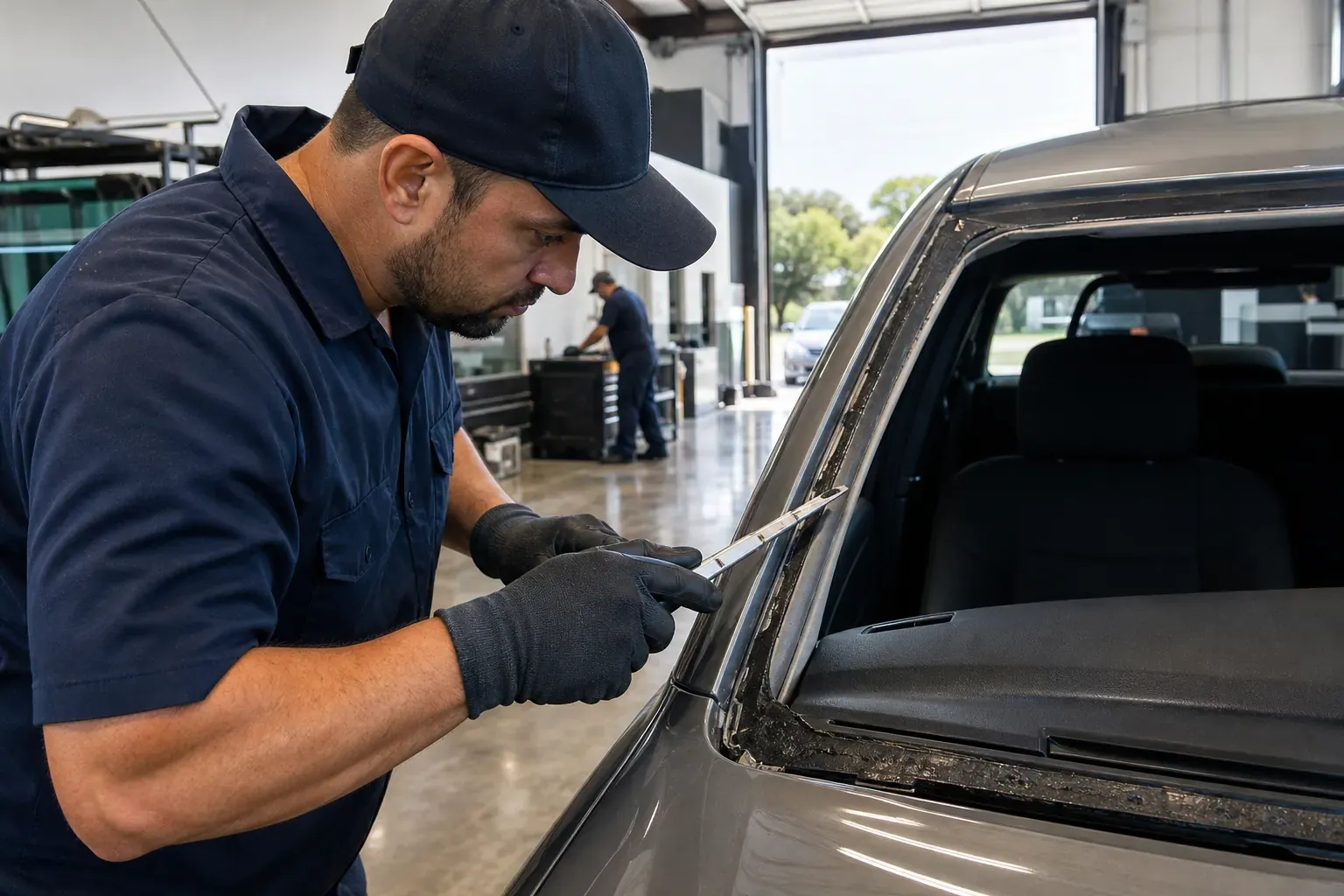
A cold knife cuts windshield urethane by hand
A long blade pushed and pulled through the bead.
Wire systems pull through the windshield bond
A wire or fibre line is drawn around the glass from inside.
Power cutters speed up windshield removal
Oscillating blades slice thick beads with less force.
A trimming knife levels the windshield bead
Once the glass is out, the old bead is cut flat.
Moldings and clips come off before the windshield cut
Before cutting, technicians remove the wiper arms, cowl panel and exterior moldings, and protect the paint and dashboard. Some clips break on removal and need replacing, which is why a full price includes moldings and clips where needed.
The full cut, short bond method preps the windshield frame
After the glass is out, the old urethane is not scraped off to bare metal. It is trimmed down to a thin, even layer, often about a millimetre or two thick. The new urethane bonds very well to that freshly cut surface, and the factory primer and paint underneath stay sealed.
Windshield adhesive prep done right or wrong
Good windshield adhesive prep prevents leaks and rust
Proper windshield adhesive prep looks like
- Old bead trimmed flat and even all round
- Factory paint and primer left intact
- Any bare metal scratches primed
- Glass edge cleaned and primed before the new bead
Rushed windshield adhesive prep leads to
- Lumpy beads that tilt the new windshield
- Bare scratched metal that rusts under the seal
- Dust, oil or old residue weakening the bond
- Leaks and wind noise at highway speed
Why solvents are not used on windshield adhesive
Cured urethane does not dissolve cleanly, and strong solvents can damage paint, primer and trim or leave residue that weakens the new bond. Cutting and trimming is cleaner and safer.
Priming and a fresh urethane bead set the new windshield
With the frame trimmed, the technician primes any bare metal, cleans and primes the frit band on the new glass, lays a fresh, even bead of urethane and sets the windshield with suction cup lifters. Then the bond needs time. Read windshield cure time before driving for the safe drive away time and the first days of aftercare.
Windshield adhesive removal, step by step
Old windshield adhesive comes out in six steps
Remove the wipers, cowl and windshield moldings
Paint and dashboard covered before any cutting.
Cut the old windshield free of the urethane
Knife, wire or power cutter, all the way round.
Trim the old windshield bead flat and even
A thin base layer for the new urethane to bond to.
Prime bare metal and the new windshield edge
Protects the frame and helps the bond.
Set the new windshield on fresh urethane
Even bead, glass centred in the frame.
Wait out the windshield safe drive away time
The car stays put until the bond is strong enough.
Adhesive prep affects ADAS cameras and long term reliability
On cars with a forward ADAS camera, the camera bracket sits on the windshield. An uneven bead can seat the glass a little high or tilted, and the camera aim moves with it. A flat, even bead puts the new windshield where the factory glass was. After the install, we arrange the calibration with our calibration partner, in the price we quote.
Windshield adhesive and ADAS
A clean windshield bond helps the ADAS camera calibration
Prep is also why shop conditions matter: dust, rain and cold slow or spoil a urethane bond. Read mobile vs in shop windshield replacement for how the setting changes the job. Leaks, wind noise and install defects from our work are fixed at no charge.
Windshield adhesive questions
Drivers ask how old windshield adhesive is removed
How do technicians remove old windshield adhesive?
Technicians remove old windshield adhesive by cutting through the urethane bead to free the glass, then trimming the old bead down to a thin, flat, even layer on the frame. Most do not scrape it to bare metal. The new urethane bonds well to the fresh cut old urethane, and keeping the factory paint layer intact protects the frame from rust.
What tools cut out a windshield?
Windshield cut out tools include cold knives and long knives pushed through the urethane, wire or fibre line systems pulled around the glass, and power cutters with oscillating blades. Technicians then use a trimming knife or scraper to level the old bead. The right tool depends on the vehicle, the bead size and whether the glass is being saved.
What is the full cut, short bond method?
The full cut, short bond method is the standard way to prepare a windshield frame. The technician trims the old urethane to a thin, even layer of about a millimetre or two rather than removing it, then lays the new urethane bead on top. Old and new urethane bond well, and the factory primer and paint underneath stay protected.
What dissolves windshield urethane adhesive?
Cured windshield urethane does not dissolve easily, which is why technicians cut and trim it rather than use solvents. Strong solvents can damage paint, primer and trim, and they leave residue that weakens the new bond. On glass, a fresh blade and a proper glass cleaner remove residue; on the frame, trimming plus the right primer is the safe approach.
Why does windshield adhesive prep matter so much?
Windshield adhesive prep matters because the urethane bond is a safety part. A good bond keeps water and wind out, helps the roof resist crushing in a rollover and holds the glass when the passenger airbag deploys against it. Poor prep, dirty surfaces or bare scratched metal can cause leaks, wind noise, rust and a weak bond.
What happens if bare metal is exposed when removing a windshield?
If bare metal is exposed while removing a windshield, the technician should treat it with the urethane maker's primer before the new adhesive goes on. Urethane does not bond reliably to bare steel, and unprotected metal can rust under the seal, which later causes leaks. A small scratch is normal; leaving it unprimed is not.
Can the old windshield adhesive be reused?
The old windshield adhesive is not reused as the bond itself. It is trimmed down to a clean, thin base layer that the fresh urethane bonds to, which is the point of the full cut, short bond method. The new bead of urethane carries the load, and it has to cure for the safe drive away time before you drive.
How can I tell if a windshield was installed properly?
A properly installed windshield sits evenly in the frame with a consistent gap all round, its moldings lie flat, there is no water inside after rain or a hose test, and there is no whistling at highway speed. Ask the shop how it preps the frame and how long the safe drive away time is. Leaks, wind noise and install defects from our work are fixed at no charge.
Does adhesive prep affect ADAS camera calibration?
Adhesive prep affects ADAS camera calibration indirectly, because an uneven bead can seat the windshield slightly high, low or tilted, and the camera bracket moves with the glass. A flat, even trimmed bead helps the new windshield sit exactly where the factory glass did. We arrange the calibration with our calibration partner, in the price we quote.
Do you replace windshields at my location?
No, we do not offer mobile service. Every windshield replacement, including cutting out the old glass and prepping the adhesive, happens at our shop at 807 Fletcher St, Dallas, TX 75223, open Mon to Sat, 8am to 6pm. Call (214) 571-6266 for the full price before any work starts.
More on windshield installation in Dallas
These Dallas guides cover the windshield install
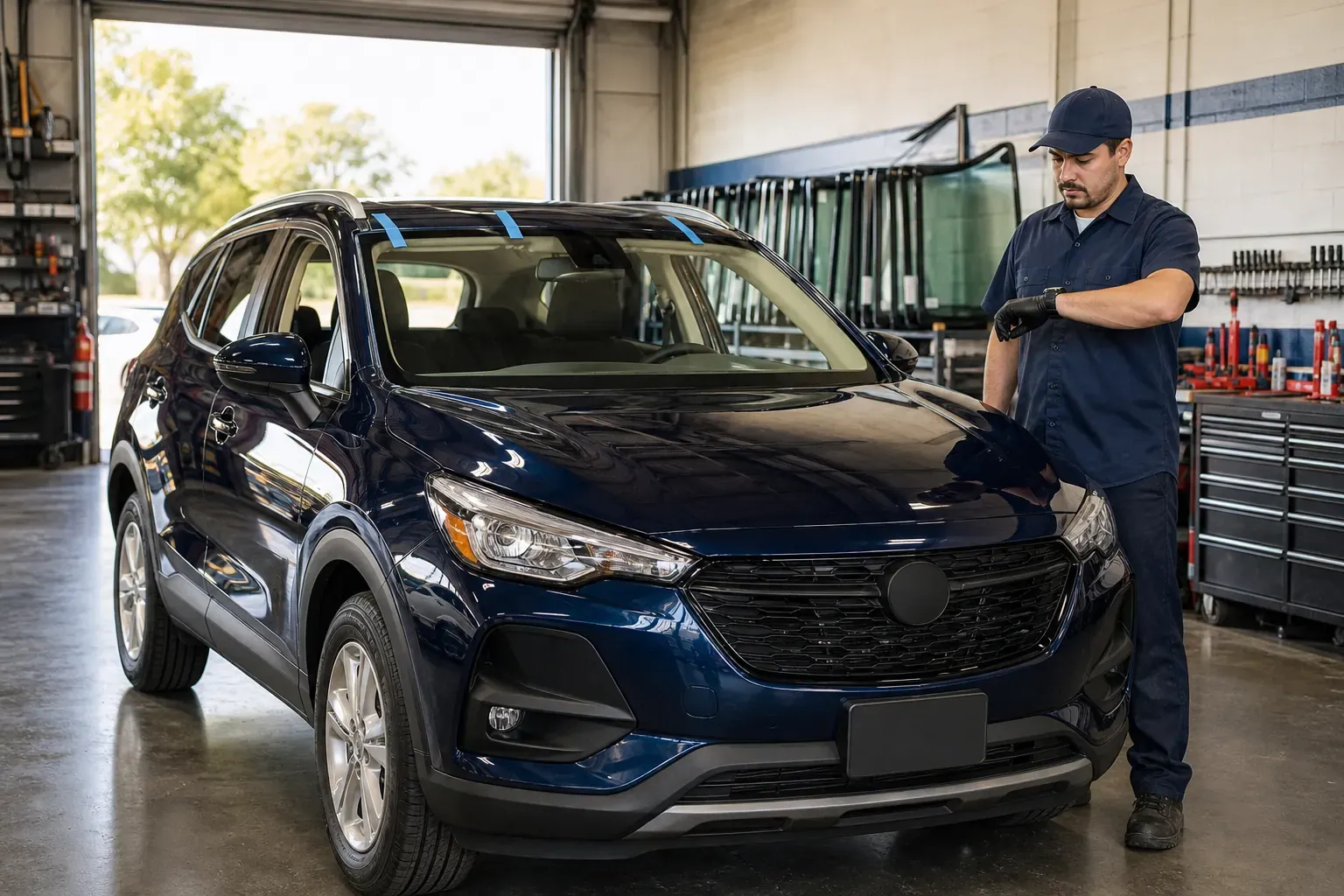
How Soon Can You Drive After Windshield Replacement?
How soon can you drive after windshield replacement? Safe drive away time, how urethane cures in Dallas heat and cold, why there is tape on a new windshield.
Read more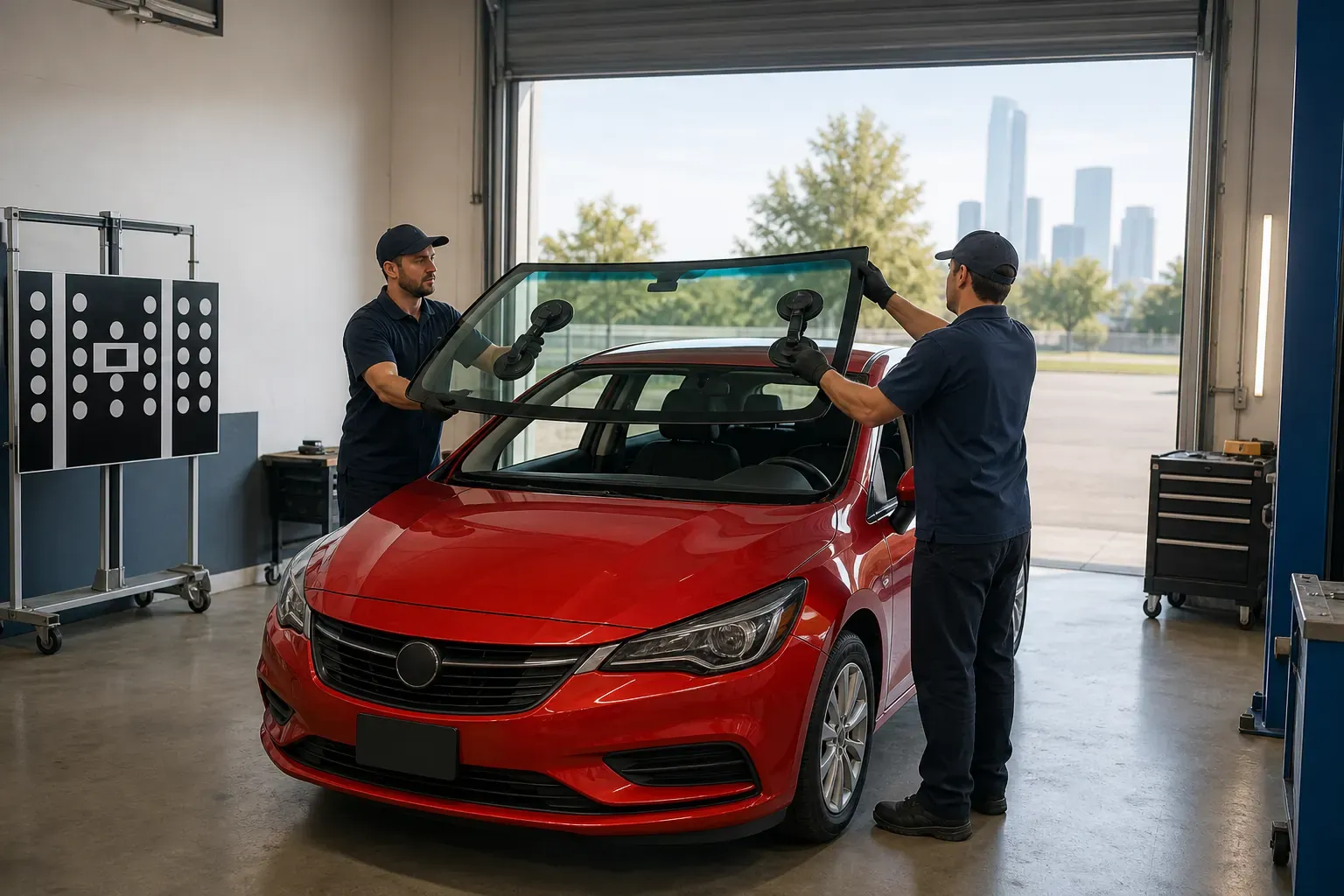
Mobile vs In Shop Windshield Replacement in Dallas
Mobile vs in shop windshield replacement in Dallas: how weather, urethane cure and ADAS calibration differ.
Read more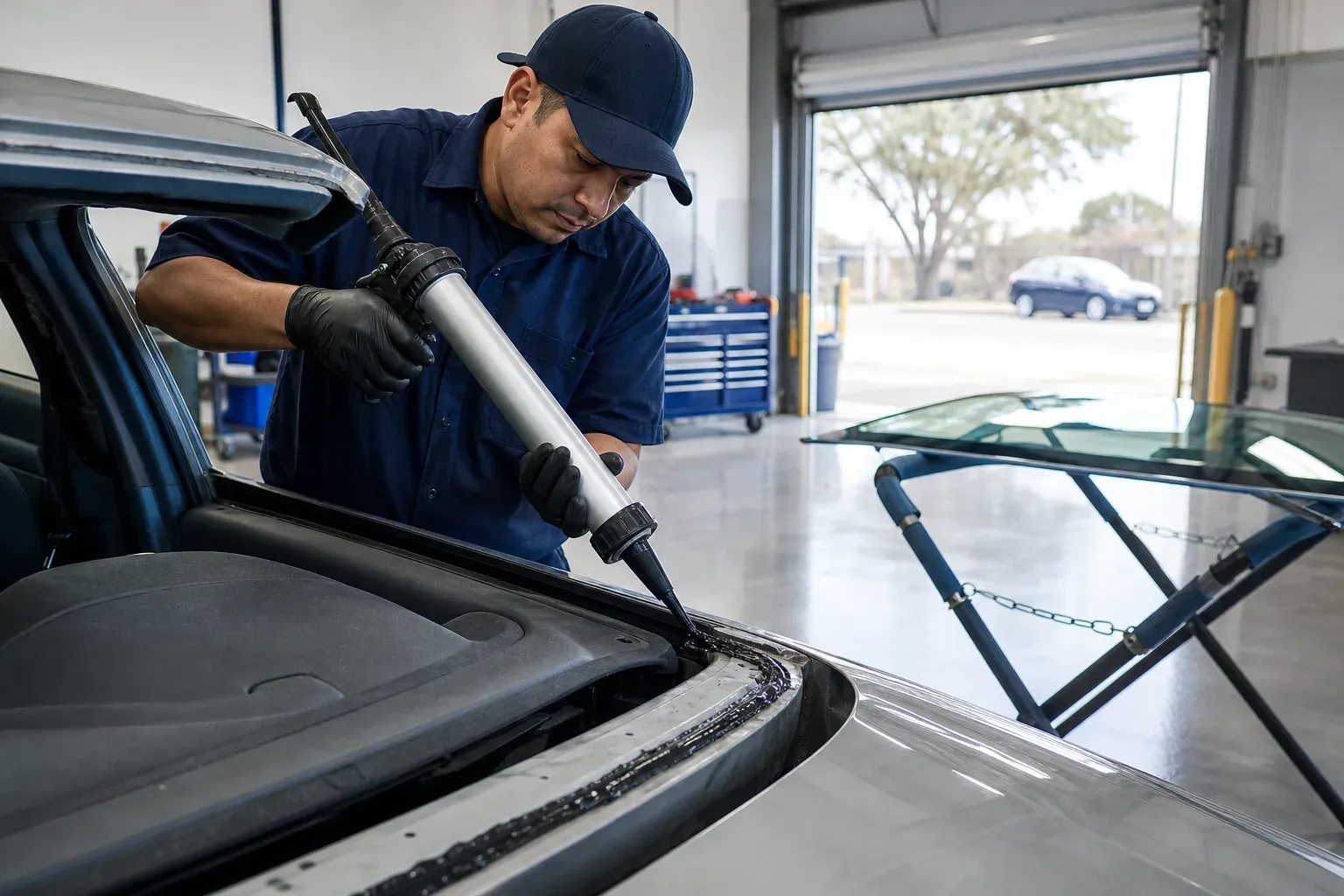
Windshield Replacement: Process, Glass and ADAS Calibration
How windshield replacement works: the steps from old glass out to cured urethane, OEM vs aftermarket glass, ADAS camera calibration and drive away time.
Read more