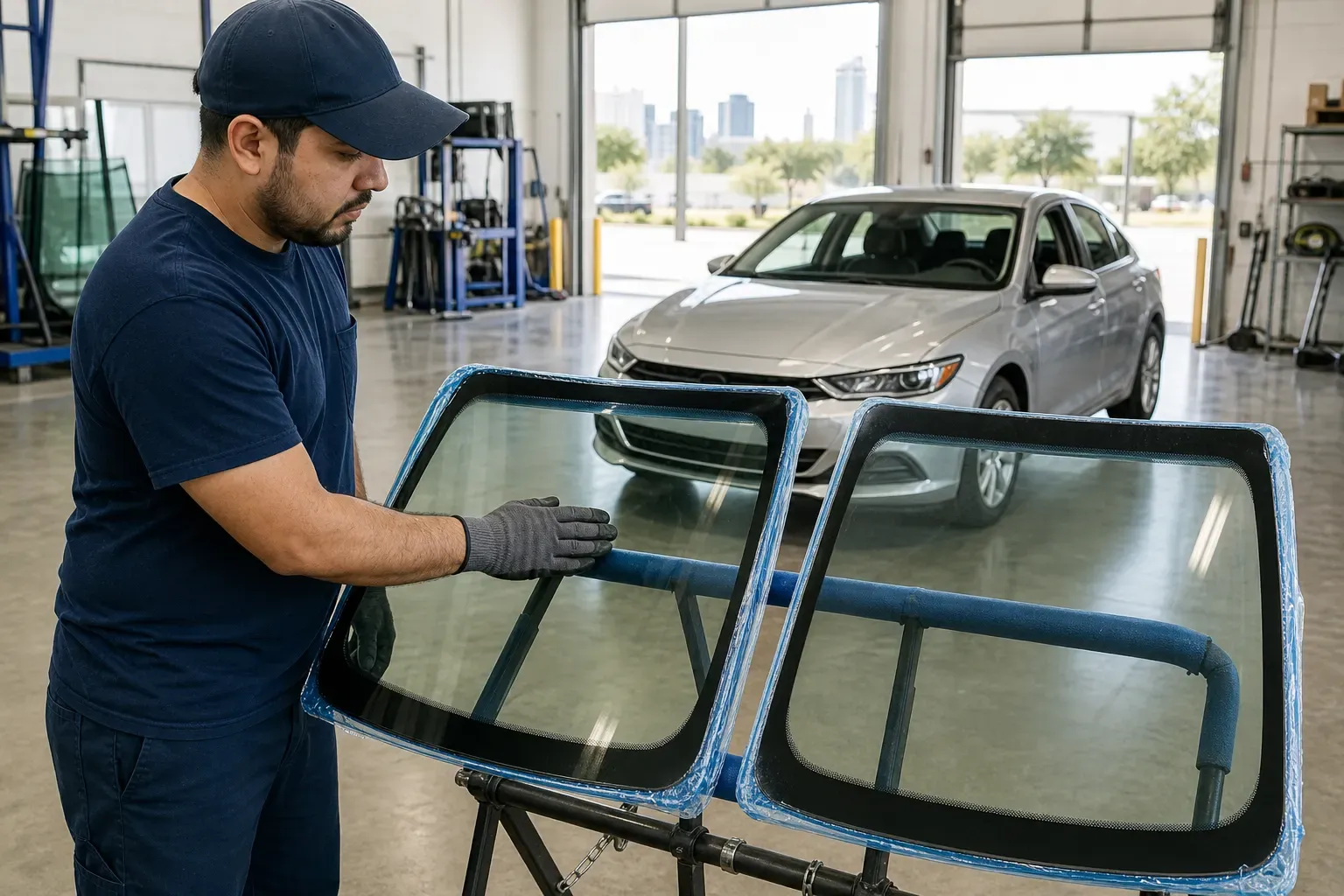
OEM vs aftermarket at a glance
OEM and aftermarket windshield glass differ in source and price
OEM windshield glass comes from the original supplier
Made to the carmaker's own specification.
Aftermarket windshield glass meets the same safety standards
Laminated safety glass, usually for less.
Windshield cameras make OEM glass the safer pick on some cars
Bracket fit and optics matter for calibration.
Our Dallas shop quotes the windshield option first
The full price before any work starts.
OEM, OEE and aftermarket windshields differ in who makes the glass
OEM (original equipment manufacturer) glass is made by the supplier that built your car's original windshield, to the carmaker's own drawing. It often carries the carmaker's logo in the black frit band. OEE (original equipment equivalent) glass is made to match the OEM part, sometimes by a company that also supplies carmakers. Aftermarket is the broad name for any replacement windshield not made by the original supplier.
None of these labels is a safety rating on its own. Every windshield sold for road use in the US must be laminated safety glass built to the same federal motor vehicle safety standards, and the glass is marked to show it.
| Windshield glass | Who makes it | Usual price | Best fit |
|---|---|---|---|
| OEM windshield | The carmaker's original glass supplier | Highest | Camera, head up display, acoustic or heated glass; new or leased cars |
| OEE windshield | Another maker, built to match OEM | Middle | Many common cars and SUVs |
| Aftermarket windshield | Independent glass makers | Usually lowest | Common vehicles with standard glass |
Laminated PVB glass makes every windshield safety glass
A windshield is laminated glass: two thin sheets of glass bonded to a clear PVB (polyvinyl butyral) interlayer. When a rock hits it, the outer layer chips or cracks but the PVB holds everything together, so the glass does not fall into the cabin. That is also why a small windshield chip can be repaired.
Side and back windows are usually tempered glass, heat treated so it shatters into small blunt pebbles instead of sharp shards. Tempered glass cannot be repaired once it breaks; it is replaced. Some newer cars also use laminated glass in the front doors for less noise and more security.
Laminated vs tempered auto glass
Laminated windshield glass and tempered side glass break differently
Your windshield is always laminated; most side and back windows are tempered.
Laminated windshield glass cracks but stays in one piece
- Two glass layers bonded to a PVB interlayer
- Holds together when hit, protecting the cabin
- Small chips and short cracks can often be repaired
- Acoustic PVB versions damp road noise
Tempered auto glass shatters into small pebbles
- One heat treated layer of glass
- Breaks into small blunt pieces, not shards
- Cannot be repaired once broken
- Replaced, with the broken glass vacuumed out
When an OEM windshield is worth the extra cost
An OEM windshield is worth the extra cost when the glass does more than keep the wind out. On a car with a forward camera, a head up display, acoustic glass or a heated windshield, small differences in shape, thickness or optics can matter. Some carmakers also call for OEM glass in their calibration procedures, and some leases ask for it.
On many common cars with standard glass, a quality aftermarket windshield fits well and saves money, and the safety standard is the same. We tell you plainly which way we would go on your car, and why.
Choosing windshield glass
Four windshield features tip the choice toward OEM glass
A windshield camera often favors OEM glass
Bracket fit and clear optics help the camera calibrate.
A head up display needs matching windshield glass
HUD glass is shaped to stop a double image.
Acoustic windshield glass keeps the cabin quiet
A special PVB layer damps wind and road noise.
Standard windshield glass usually suits aftermarket
Same safety standard for less money.
Windshield glass choice and ADAS camera calibration
Many newer cars carry a forward camera behind the windshield, and every new windshield on those cars needs the camera calibrated. Most quality aftermarket windshields calibrate fine; a few vehicles are pickier about glass. We check your vehicle by VIN, and we arrange ADAS camera calibration with our calibration partner as part of the full price, whichever glass you choose.
OEM vs aftermarket and your price
Our Dallas shop quotes both windshield glass options first
Call with the year, make, model and trim, or the VIN. When both options suit your car, you hear the price of each, calibration included, before any work starts. See what else moves the number on windshield replacement cost in Dallas, or find your car on windshield replacement by vehicle.
OEM vs aftermarket windshield questions
Drivers ask about OEM, aftermarket and PVB windshield glass
What is the difference between an OEM and an aftermarket windshield?
An OEM windshield is made by the glass supplier that made the original windshield for your carmaker, to the carmaker's specification. An aftermarket windshield is made by another glass maker to fit the same vehicle. Both are laminated safety glass built to the same federal safety standards; they can differ in price, exact shape, tint and how closely the camera bracket matches.
Is an aftermarket windshield safe?
A quality aftermarket windshield is safe. It is laminated safety glass made to the same federal safety standards for auto glass as an OEM windshield, with a plastic interlayer that holds the glass together when it breaks. The install matters as much as the glass: clean pinch weld, fresh urethane and the right drive away time.
Is an OEM windshield necessary?
An OEM windshield is not necessary on many cars, but it is often the better choice on a vehicle with a windshield camera, head up display, acoustic glass or a heated windshield, where optics and bracket fit matter most. Some carmakers also recommend OEM glass for camera calibration. We tell you which suits your vehicle before we quote.
What does OEE glass mean, and is it good or bad?
OEE stands for original equipment equivalent: glass from another maker built to match the OEM part, sometimes by a supplier that also makes OEM glass. OEE glass is not good or bad by label alone. Good OEE glass fits and performs well on many vehicles; we check that the part suits your car and camera before you choose.
What does PVB stand for in a windshield?
PVB stands for polyvinyl butyral, the clear plastic layer sandwiched between the two sheets of glass in a laminated windshield. When the windshield breaks, the PVB holds the pieces together, so the glass cracks in a web instead of falling into the cabin. Acoustic windshields use a special PVB layer that damps road and wind noise.
What types of windshield glass are there?
Every modern car windshield is laminated safety glass: two layers of glass bonded to a PVB interlayer. Within that, windshields vary by features: solar or tinted glass, acoustic glass, heated glass, head up display glass and glass with a camera bracket or rain sensor mount. Side and back windows are usually tempered glass instead.
Does aftermarket glass affect ADAS camera calibration?
Aftermarket glass can affect ADAS camera calibration if the camera bracket, glass thickness or optical clarity in the camera area differs from the original. Many quality aftermarket windshields calibrate without trouble, but some vehicles are pickier. We check your vehicle and arrange the calibration with our calibration partner as part of the full price.
How much more does an OEM windshield cost?
An OEM windshield usually costs more than an aftermarket windshield for the same vehicle, and the gap is widest on luxury cars, EVs and windshields with special features. The exact difference depends on your vehicle, so we quote both options when they apply and tell you which we recommend, all before any work starts.
Will insurance pay for an OEM windshield?
Some Texas policies pay for OEM glass and some pay for aftermarket glass unless OEM is needed for safety or the vehicle is new. It depends on your policy wording, often called an OEM endorsement. Check your declarations page or ask your agent; we help with the claim and tell you which glass the claim covers.
Can I choose OEM glass at your Dallas shop?
Yes, you can choose OEM or quality aftermarket windshield glass at our shop at 807 Fletcher St, Dallas, TX 75223, open Mon to Sat, 8am to 6pm. Call with the year, make, model and trim, and you hear the price of each option before any work starts. There is no mobile service.
More on windshield glass
More on windshield replacement and glass in Dallas
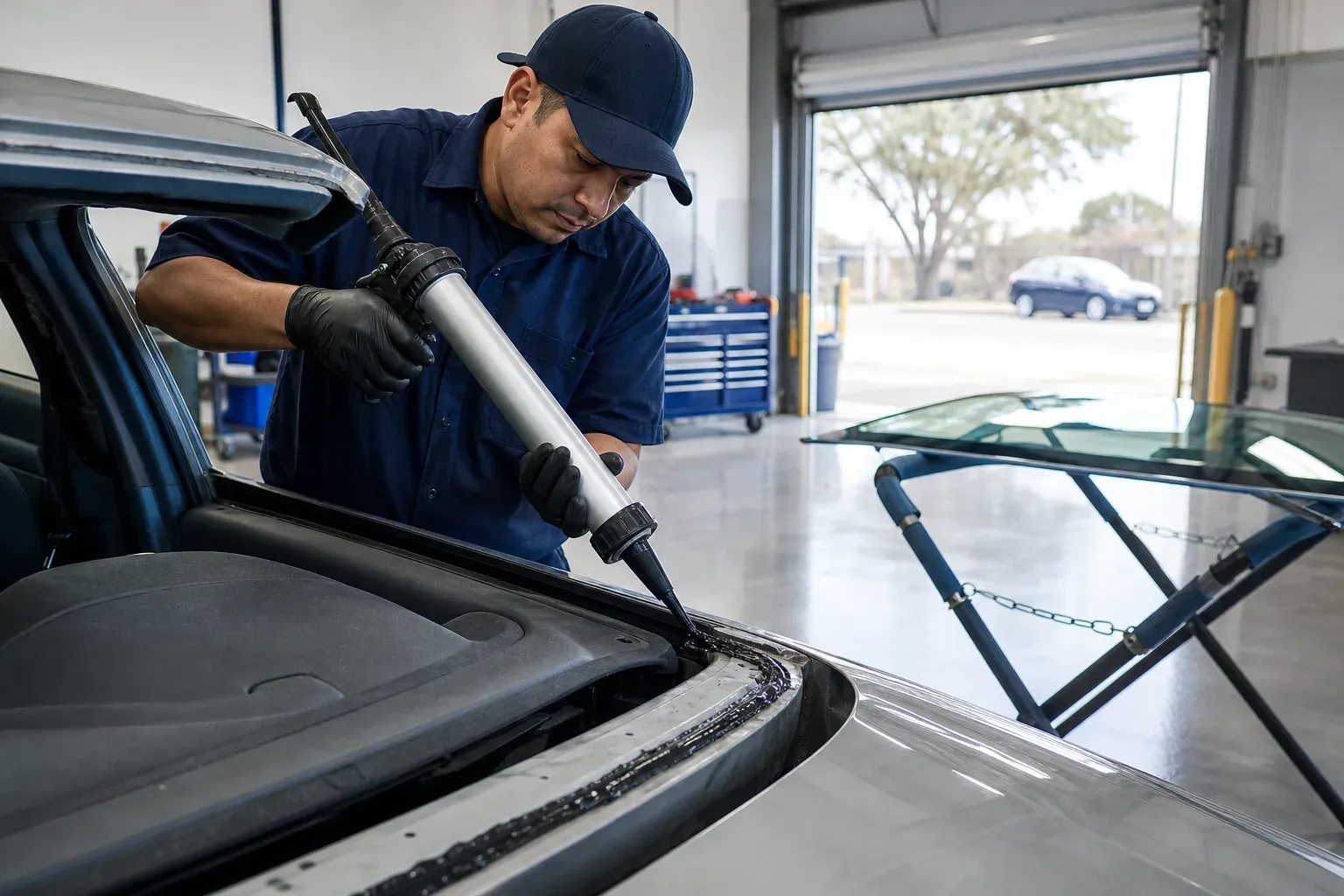
Windshield Replacement: Process, Glass and ADAS Calibration
How windshield replacement works: the steps from old glass out to cured urethane, OEM vs aftermarket glass, ADAS camera calibration and drive away time.
Read more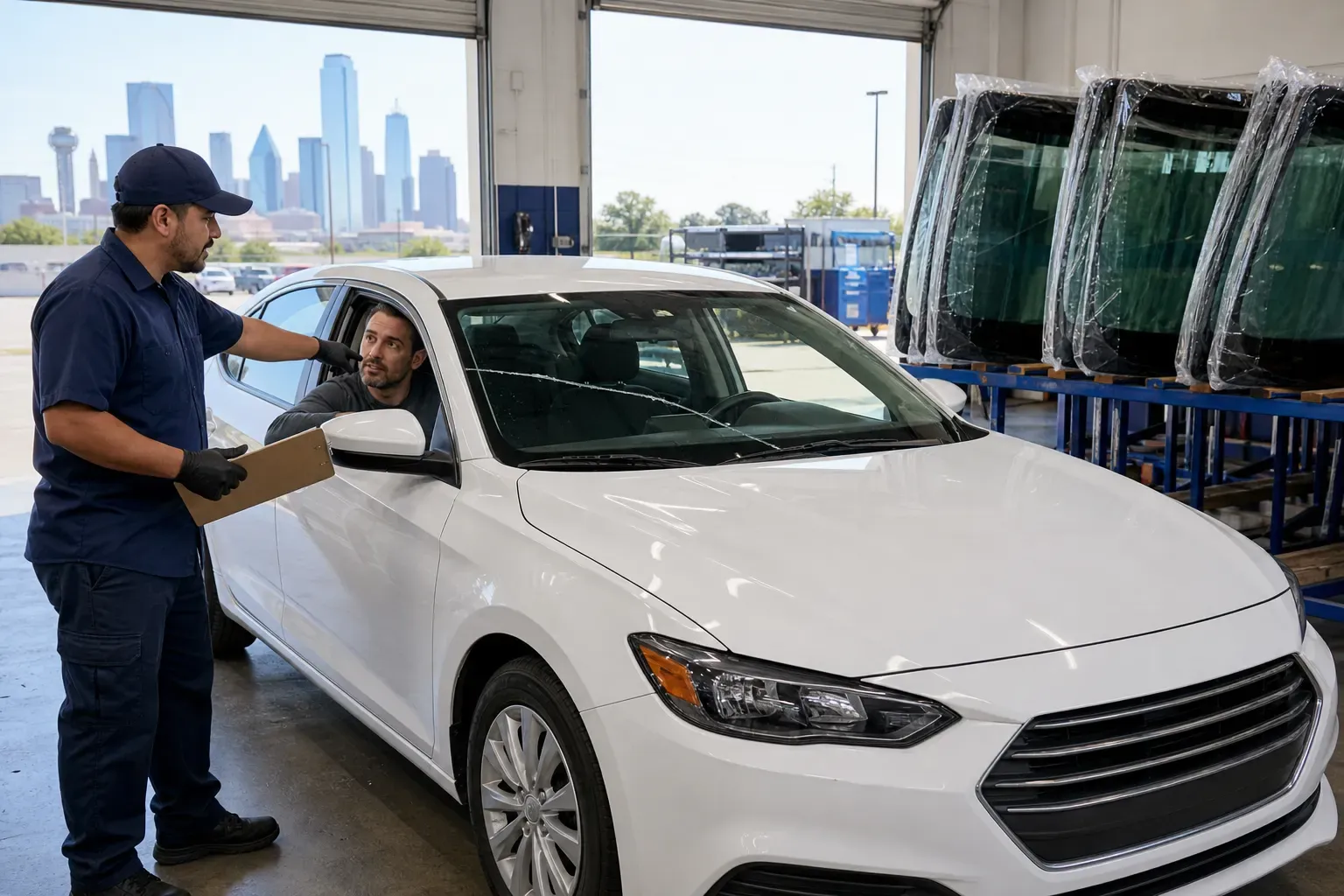
Windshield Replacement Cost in Dallas
How much windshield replacement costs in Dallas: typical market ranges, the eight factors that change the price, habits that lower it.
Read more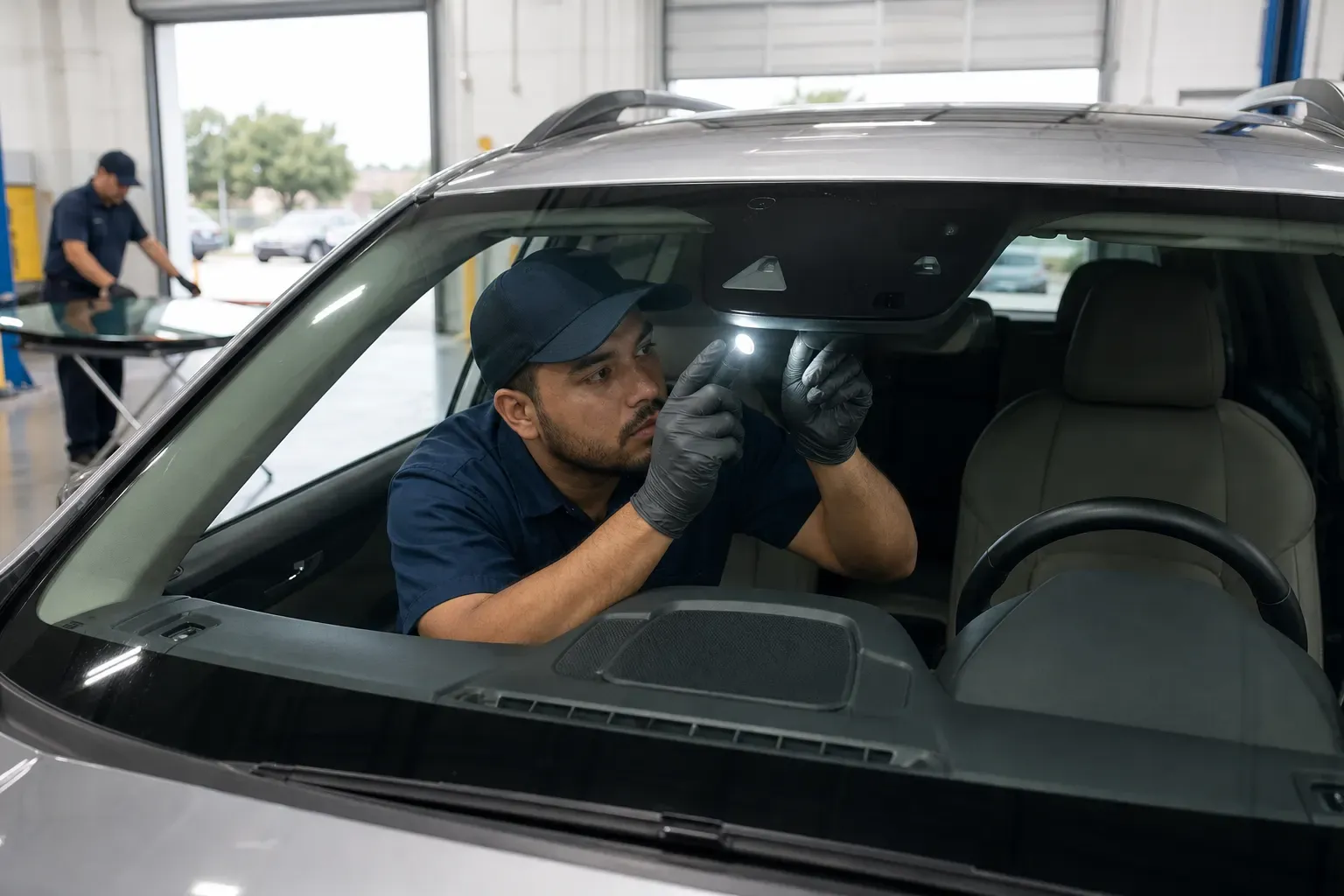
ADAS Camera Calibration in Dallas Fort Worth
ADAS camera calibration after windshield replacement in Dallas: static or dynamic, arranged with our calibration partner and included in the full price before.
Read more